We build software for the institutions societies depend on.
DDR Technologies is a Ghanaian enterprise-software company. Hospitals are where we started — because they are the hardest, highest-stakes version of the problem we exist to solve.
Hospitals run on software that was never designed as one system. A patient is a record in six databases. A service is done somewhere in the building and never lands on the bill. The monthly NHIS claim takes an officer days by hand. The people doing the work fill the gaps — with re-entry, with reconciliation, with spreadsheets — and the institution pays for those gaps in money, hours, and mistakes.
DDRT was founded by people who spent years building, deploying, and supporting hospital software in Ghana — close enough to hear what the people using it really thought. We watched these things break, and we fielded the complaints that never stopped: bugs that outlived every release, and systems so rigid that the ward, the lab, and the claims office had to bend their working day around the software.
“We watched services get done and never billed, claims officers lose days to manual files, and systems die when the network does. And every week, the same complaints about the same bugs nobody fixed. DDRT is the system we wished we'd had.”
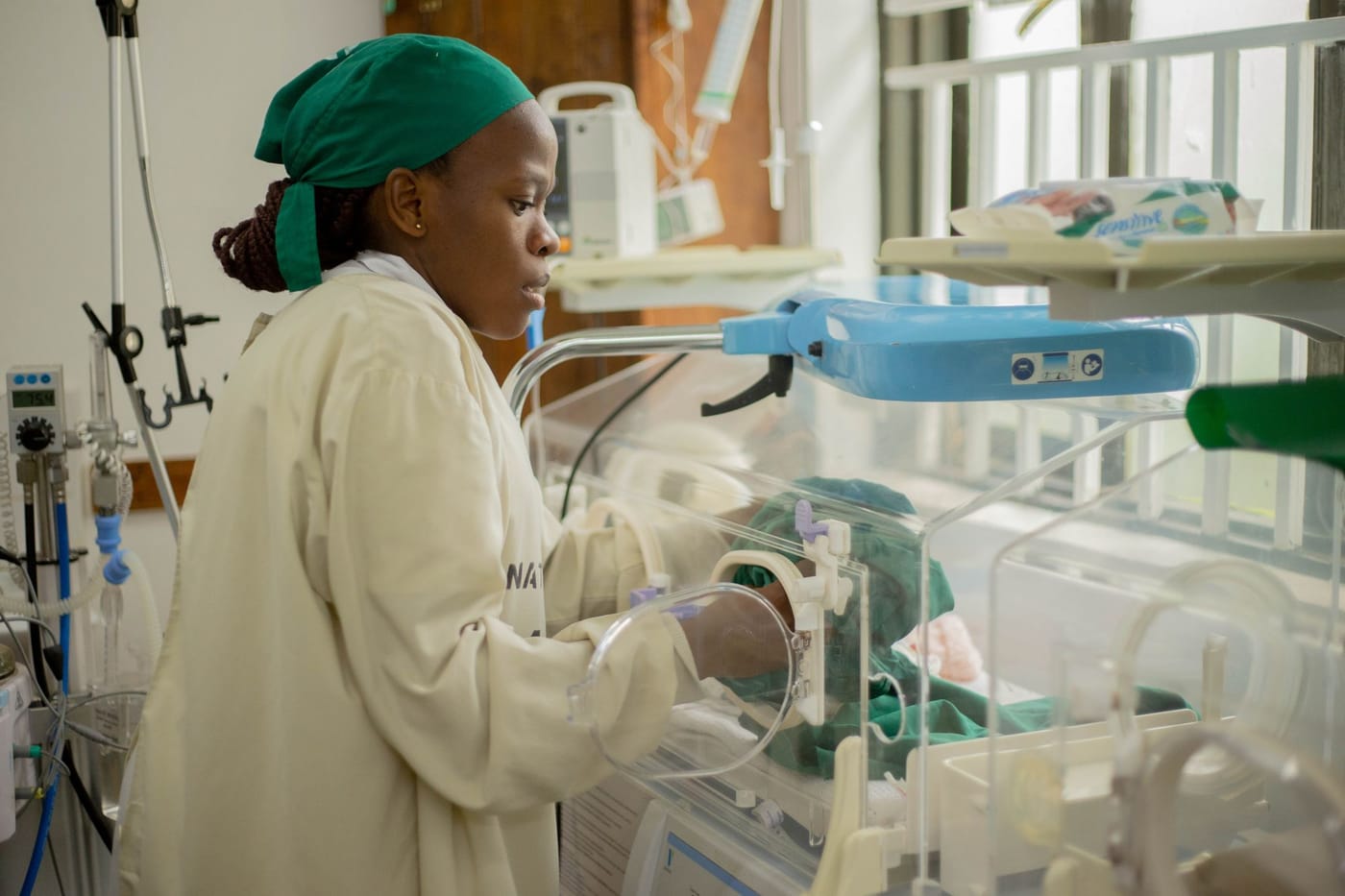
The stakes. A neonatal ward has no patience for software that fails.
We believe institutions here deserve the same quality of software as the world's best technology companies — and that the only honest way to deliver it is to build the platform first: one secure core — one sign-in, one set of access rules, one audit trail — with every module running on it. That is why, in DDRT, the ward agrees with the ledger by construction, not by integration. And because screens, forms, and rules in DDRT are configuration rather than code, the system takes the shape of each hospital's workflow — instead of forcing the hospital into its own. If you want that argument in full, it has its own page.
We started with healthcare because it is the hardest version of the problem. A platform that can run a hospital — where a prescribing decision, an insurance rule, and a ledger entry must hold together under pressure, sometimes without reliable power or network — can run almost anything. And the platform is already bigger than hospitals: the same core carries a complete packaged-water distribution product — production, route sales, an offline field app — and a multi-channel retail point of sale, all demonstrable live. Healthcare is the deep vertical. The platform is the company. And when an organisation needs software of its own — a mobile app, a web platform, a system built around its work — that is work we take on directly: what we build.
Where we are
Early — and we say so plainly.
We have no customer logos to show you, and we won't pretend otherwise. What we have is a finished, working system we will walk you through live — registration to NHIS claim to the financial statements — and a Founding Programme built so that being first is the safest seat in the room: staged payments, founding pricing locked in, source-code escrow, and a direct line to the people who built the system.
There are five founding slots. Not a marketing number — a capacity decision. Five institutions is what we can onboard to the standard we've set, with the founder-level attention the programme promises. When they're filled, founding terms close.
We measure ourselves the way our customers will: does the ward agree with the ledger, did the shift end faster, did the claim get paid. Everything else is commentary.
The people
Built by people you can call.
The DDR in DDR Technologies is us — Daniel, Derrick, and Rhoda. We put our initials on the company because we answer for it personally.
The people who built DDRT run the demos, sit in the discovery sessions, and answer founding-hospital calls. In a market that buys from people before products, you should know exactly who you're dealing with.
DOT
Daniel Ogbamey Tetteh
Founder · Lead Engineer
Daniel has spent years inside Ghanaian hospitals — deploying, configuring, and supporting hospital management systems in facilities from private medical centres to teaching hospitals, and training the clinicians, claims officers, and accounts staff who use them every day. He designed and built the DDRT platform. This company is his answer to what he watched hospital software get wrong.
RKA
Rhoda Kusi Appiah
Co-founder · Project Manager
Rhoda has spent years managing hospital management system projects across Ghana — leading deployments, coordinating go-lives, and supporting facilities through the change that follows. At DDRT she runs delivery: the discovery, training, and onboarding that take a founding hospital from first conversation to go-live.
DT
Derick Tetteh
Co-founder · Software Engineer
Derick develops and supports hospital management systems in Ghana, with a focus on the financial side of care — his current work is building the accounting system for one of the country's leading hospitals.
How we work
Four rules we don't break.
Rule 1
Prove it live.
We would rather show you the working system than send you slides. If a screen isn't live in your build yet, we say “roadmap” — so that everything we do show you can be taken at face value.
Rule 2
Guarantees, not intentions.
Our platform's constitution is written down: deny-by-default access, all-or-nothing saves, and an audit trail that covers the reads that matter. Breaking a guarantee requires a new major version — not a sprint.
Rule 3
Build for the front line.
Software succeeds at the pharmacy counter and the nurses' station or it doesn't succeed at all. Fewer screens, fewer re-entries, workflows shaped around real shifts — including power cuts.
Rule 4
Your data is yours.
On-premises deployment, licensing that can never lock you out, a working export right, and source-code escrow. Choosing DDRT must never mean being unable to leave DDRT.
DDR Technologies — Ghana13 integrated products on one platform3 industries built on one core5 founding-hospital slots open
Next step
See what we've built. Judge us on it.
A 45-minute working session on the live product, with scenarios from your institution. No slideware.
 DDRT
DDRT